
Straight vs Tapered Dart Barrels – Which Should You Use?
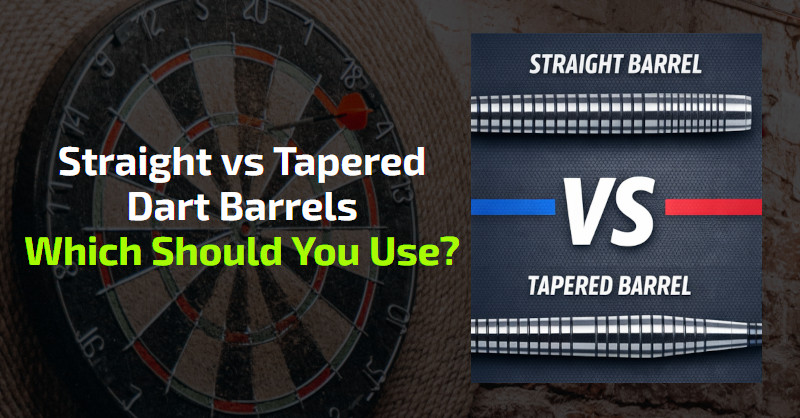
When choosing darts, barrel shape plays a major role in how a dart feels, releases, and groups in the board. Two of the most common designs are straight barrels and tapered barrels — and while both are used at every level of the game, they suit different throwing styles.
Understanding the difference can help you choose darts that feel more natural in the hand and improve consistency at the oche.
What Is a Straight Dart Barrel?
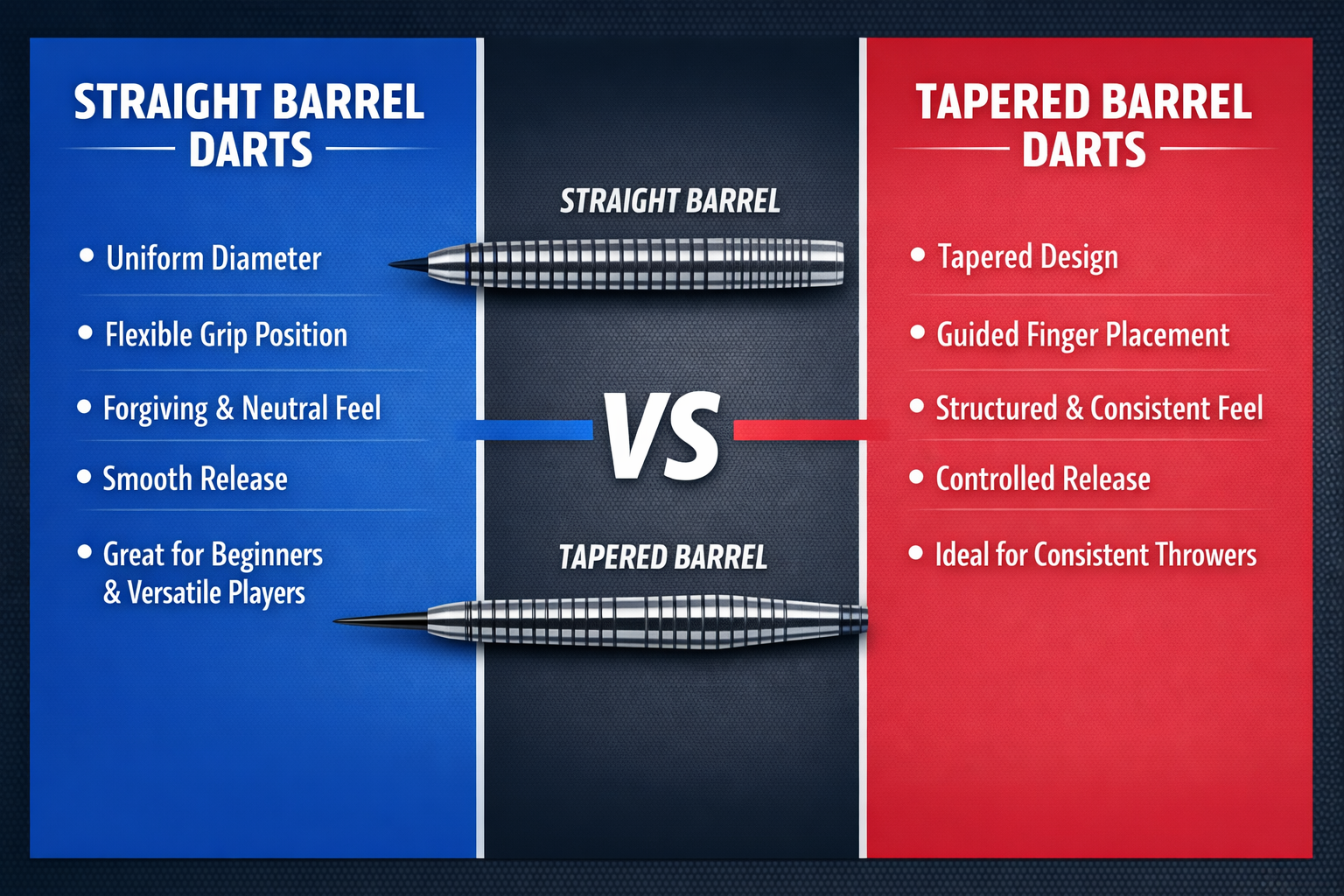
A straight barrel has a uniform diameter from front to back. This creates a consistent grip surface along the entire length of the dart.
Key Characteristics of Straight Barrels
- Even thickness throughout
- Flexible finger placement
- Predictable, neutral feel
- Consistent release point
Because the barrel doesn’t guide the fingers to a specific spot, straight barrels are considered forgiving and versatile.
Who Straight Barrels Suit Best
- Players who adjust finger placement
- Those who grip the dart in different positions
- League and pub players
- Beginners and experienced players alike
Many popular darts from Red Dragon use straight barrel designs because they work well with a wide range of grips and throwing actions.
What Is a Tapered Dart Barrel?
A tapered barrel gradually narrows toward the front (or sometimes the rear). This change in shape subtly guides finger placement and affects balance and release.
Tapered barrels are often paired with directional grip patterns, such as buttress grooves, to further encourage a consistent hand position.
Key Characteristics of Tapered Barrels
- Gradual change in barrel width
- Encourages a fixed grip position
- More structured feel in the hand
- Often improves grouping for consistent throwers
Who Tapered Barrels Suit Best
- Players with a repeatable grip
- Those who like guided finger placement
- Intermediate to advanced players
- Throwers seeking tighter grouping
Tapered barrels are commonly chosen by players refining their technique and looking for greater consistency.
How Barrel Shape Affects Grouping
Straight barrels are often preferred for tight grouping because:
- The uniform shape allows darts to sit close together
- There’s less chance of deflection on entry
Tapered barrels can also improve grouping by:
- Helping darts enter the board at a more consistent angle
- Reducing bounce-outs through guided release
The key difference is how the grouping is achieved — flexibility versus structure.
Straight vs Tapered: Key Differences at a Glance
Straight Barrels
- Uniform shape
- Flexible grip positions
- Neutral, forgiving feel
- Easier to adapt to
Tapered Barrels
- Gradual narrowing profile
- Guided finger placement
- More technical feel
- Encourages consistency
Neither is objectively better — the right choice depends on how you throw.
Common Myths About Barrel Shape
“Tapered barrels are only for pros”
Not true. They simply suit players with a consistent grip.
“Straight barrels are basic”
Many professionals use straight barrels because of their reliability and versatility.
“Barrel shape fixes technique”
The right barrel supports good technique — it doesn’t replace it.
How to Choose the Right Barrel Shape for You
Ask yourself:
Do I grip the dart in the same place every time?
→ Try tapered
Do I like flexibility and a neutral feel?
→ Try straight
Am I still refining my throw?
→ Start with straight, experiment later
If possible, test both styles over multiple sessions — barrel shape often feels different after extended play.
Final Thoughts
Choosing between straight and tapered dart barrels is about matching equipment to your natural throwing style.
- Straight barrels offer versatility, forgiveness, and adaptability
- Tapered barrels provide guidance, structure, and consistency
The best barrel is the one that feels comfortable, encourages a repeatable throw, and gives you confidence at the oche.