
Ring Grip vs Buttress Grip – What’s the Difference?
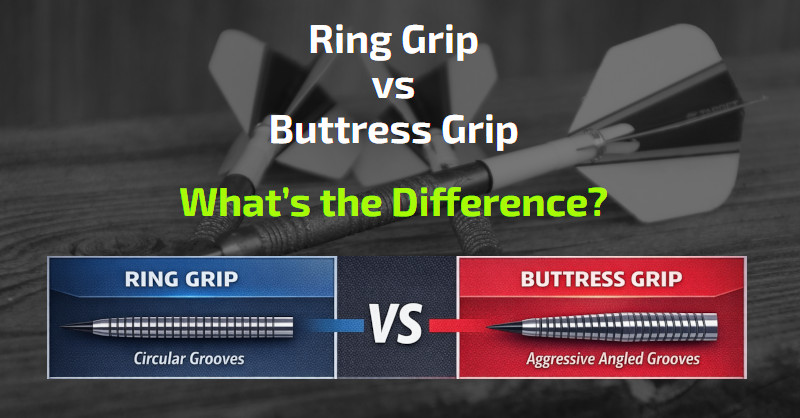
When choosing darts, grip type is one of the most important — and most misunderstood — factors. Two of the most common grip styles found on modern tungsten darts are ring grip and buttress grip.
While both are designed to improve control and consistency, they feel very different in the hand and suit different throwing styles. Understanding the difference can help you choose darts that work with your throw, not against it.
What Is Ring Grip?
Ring grip is the most traditional and widely used dart grip style. It consists of evenly spaced circular grooves cut around the barrel.
Key Characteristics of Ring Grip
- Uniform grip along the barrel
- Predictable, familiar feel
- Easy to adjust finger placement
- Consistent release across throws
Because the grip is symmetrical, ring-grip darts feel the same regardless of where the fingers sit, making them ideal for players who like flexibility or are still refining their grip.
Who Ring Grip Suits Best
- Players who like a balanced, all-round grip
- Those upgrading from smoother darts
- League and pub players
- Players who adjust finger placement during play
Popular ring-grip darts from Red Dragon include ranges such as Amberjack and Razor Edge.
What Is Buttress Grip?
Buttress grip uses angled or directional grooves rather than simple rings. These grooves are designed to guide the fingers into position and provide enhanced traction in specific directions. You’ll often find buttress grip on tapered barrels, where grip and barrel shape work together to encourage a consistent hand position.
Key Characteristics of Buttress Grip
- Angled grip cuts for directional control
- Strong tactile feedback
- Encourages consistent finger placement
- Slightly more technical feel
Because buttress grip has directionality, it can feel more “locked in” than ring grip.
Who Buttress Grip Suits Best
- Players who want guided finger placement
- Throwers with a consistent grip position
- Intermediate to advanced players
- Those who prefer a firm, technical feel
Darts such as Recon Nitro Performance are often described by players as tapered or buttress-grip darts for this reason.
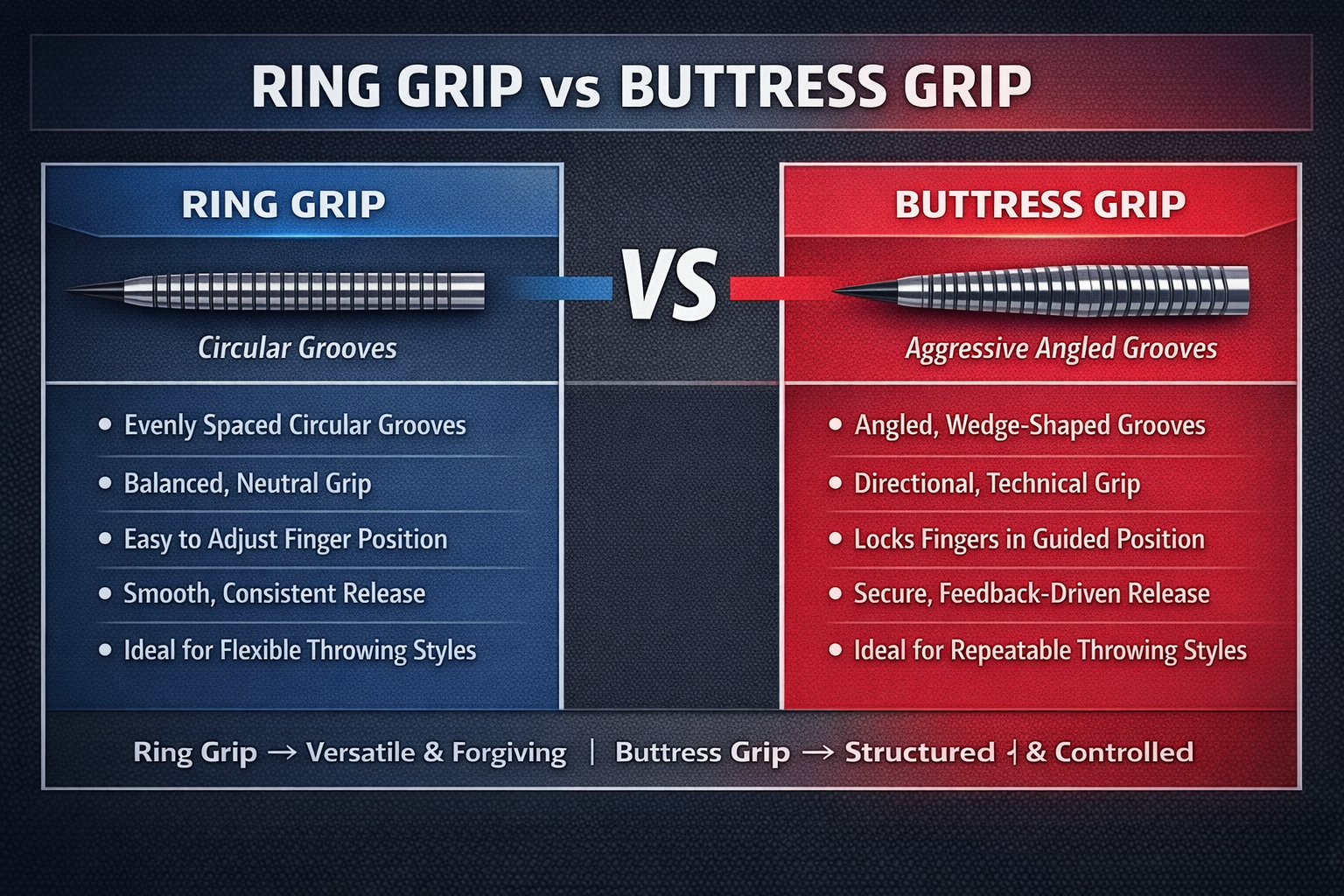
Key Differences at a Glance
Ring Grip
- Circular grooves
- Neutral, even feel
- Easier release
- More forgiving
Buttress Grip
- Angled grooves
- Directional control
- Firmer grip sensation
- More structured feel
Neither grip is “better” — they simply offer different feedback and control.
How Grip Choice Affects Accuracy
Accuracy is about repeatability, not grip strength.
- Ring grip helps players maintain a natural, relaxed release
- Buttress grip helps players reproduce the same finger position every time
If your darts slip or feel inconsistent, more grip may help.
If your darts feel like they’re dragging on release, a smoother grip may be better.

Ring vs Buttress: Which Should You Choose?
Choose ring grip if you:
- Prefer a classic, familiar feel
- Want flexibility in finger placement
- Like a smoother, cleaner release
Choose buttress grip if you:
- Want guided finger positioning
- Prefer a firmer, more technical grip
- Throw with a consistent, repeatable action
Many players experiment with both styles over time — grip preference often evolves as technique improves.
Final Thoughts
Ring grip and buttress grip are both proven designs used by players at every level of the game. The right choice isn’t about copying professionals — it’s about finding a grip that complements your throwing style and helps you throw the same dart, the same way, every time. Understanding grip types is one of the fastest ways to make smarter equipment choices and improve consistency at the oche.