
How to Choose the Right Dart Weight (21g vs 23g vs 24g)
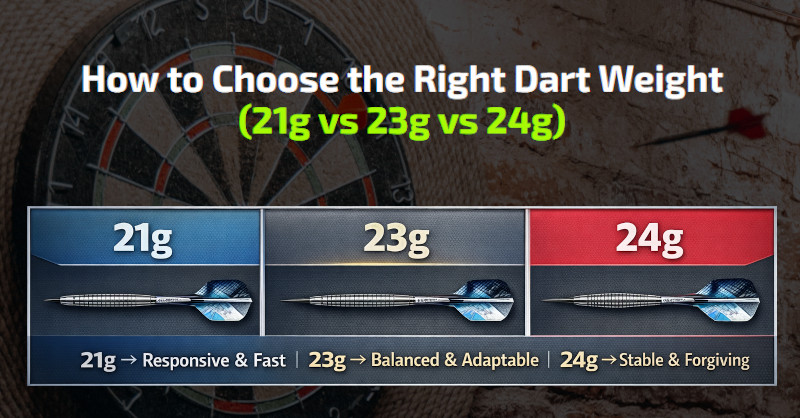
One of the first — and most important — decisions when choosing darts is weight. While personal preference always plays a role, dart weight has a direct impact on control, consistency, and throwing confidence.
The most popular weights for steel tip darts are 21g, 23g, and 24g. Each offers a different feel in the hand and suits different throwing styles. Understanding the differences can help you make a smarter, more confident choice.
Why Dart Weight Matters
Dart weight affects:
- How much force you need to apply
- How stable the dart is in flight
- How forgiving the dart feels on release
- How consistently you can repeat your throw
Heavier darts rely more on gravity and momentum, while lighter darts rely more on arm speed and timing. There’s no “best” weight — only what works best for you.
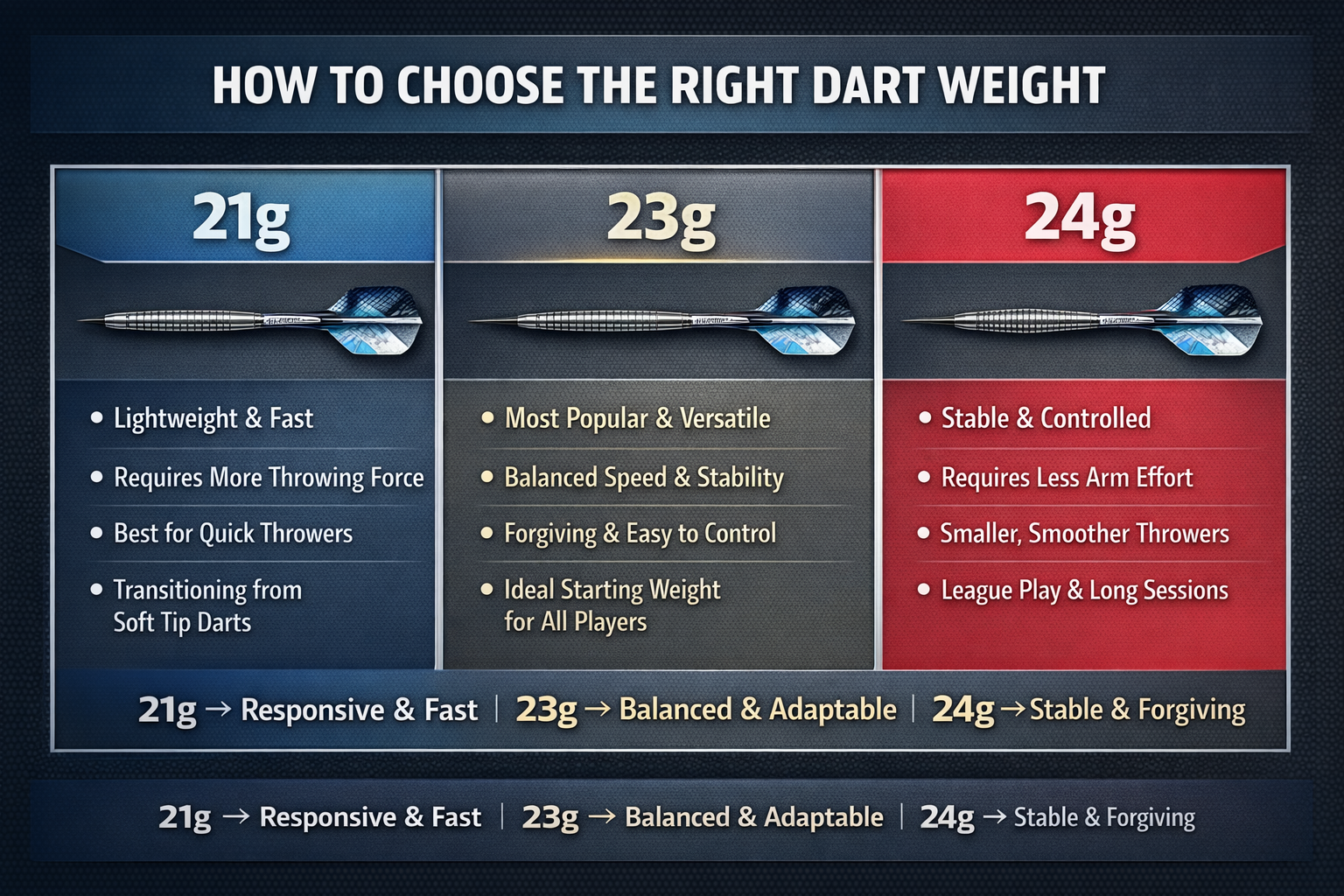
21g Darts – Lightweight and Fast
21g darts are at the lighter end of the steel tip spectrum and are often chosen by players who like a quicker, more responsive throw.
Best for:
- Faster arm actions
- Players transitioning from soft tip darts
- Throwers who prefer a lighter feel
- Players who like to generate their own pace
Things to consider:
- Require slightly more throwing force
- Can exaggerate inconsistencies in release
- Less forgiving over long sessions
21g darts are popular with developing players who favour speed and agility at the oche.
23g Darts – The Most Popular All-Round Choice
23g darts are widely considered the most versatile and commonly used weight in the game.
Why 23g is so popular:
- Excellent balance of speed and stability
- Less effort required than lighter darts
- Forgiving for minor release inconsistencies
- Suits a wide range of throwing styles
Many professional and league players settle around this weight because it offers control without feeling slow. If you’re unsure where to start, 23g is often the safest and most adaptable choice.

24g Darts – Stability and Control
24g darts sit at the heavier end of commonly used match darts and are favoured by players who prioritise control and consistency.
Best for:
- Smooth, deliberate throwers
- Players who want reduced arm effort
- Longer practice or league sessions
- Throwers who value stability over speed
Benefits:
- More stable flight
- Less affected by release errors
- Encourages a relaxed, controlled action
Many players find that moving up to 24g helps tighten grouping and reduce fatigue.
Why Many Pro Players Use 23g–24g
At higher levels, consistency matters more than speed. This is why many professional players — including those using darts designed by Red Dragon — favour weights in the 23g–24g range.
Heavier darts:
- Require less force to reach the board
- Help smooth out minor technique flaws
- Maintain stability under pressure
That doesn’t mean lighter darts are wrong — just that heavier weights tend to be more forgiving.
Common Myths About Dart Weight
“Heavier darts are only for strong players”
Not true. Heavier darts often require less effort, not more.
“Lighter darts are more accurate”
Accuracy comes from consistency, not speed.
“Pros all use the same weight”
They don’t — but most cluster around mid-to-heavy weights for control.
How to Choose Your Ideal Weight
A simple approach:
- Start with 23g if you’re unsure
- Drop to 21g if darts feel slow or heavy
- Move up to 24g if you struggle with consistency
If possible, test different weights over several sessions — not just a few throws. Comfort and repeatability matter more than first impressions.
Final Thoughts
Choosing between 21g, 23g, and 24g darts is about finding the right balance between speed, control, and consistency.
- 21g → Fast and responsive
- 23g → Balanced and versatile
- 24g → Stable and forgiving
The right weight should help you throw naturally, confidently, and consistently — not force you to adjust your technique to suit the dart.