
Dart Flights Explained:
Shapes, Sizes, and Performance
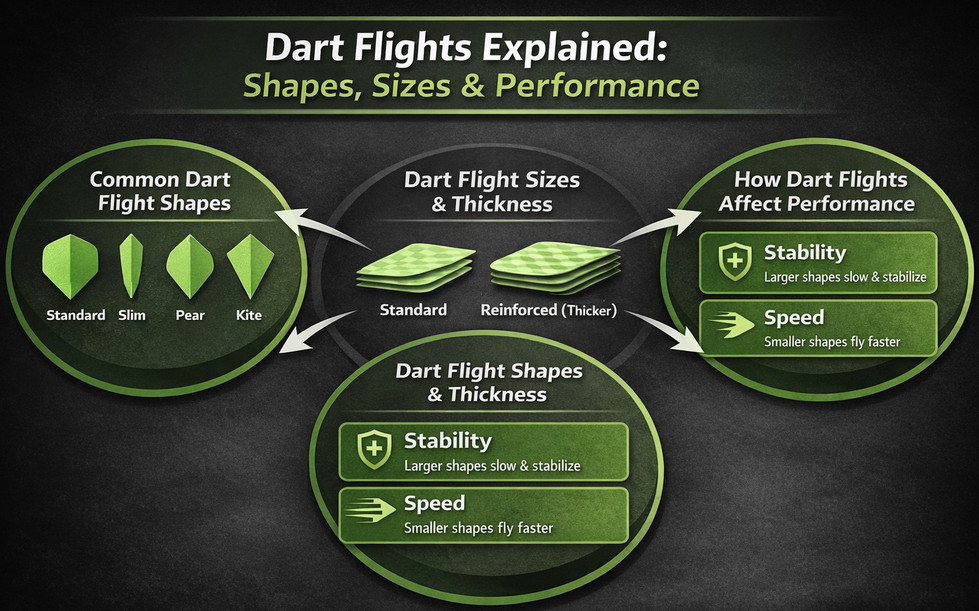
Dart flights play a crucial role in how your darts behave in the air and how consistently they land in the board. While often overlooked, the shape, size, and material of a dart flight can significantly affect stability, speed, and accuracy. Understanding how dart flights work makes it easier to fine-tune your setup and improve performance — whether you’re a beginner or a league regular.
What Do Dart Flights Do?
Dart flights create air resistance at the back of the dart. This resistance stabilises the dart in flight, keeps the point leading, and helps the dart enter the board at a consistent angle.
In simple terms: Larger flights = more stability, slower flight | Smaller flights = less drag, faster flight
The right balance depends on your throwing style, dart weight, and personal preference.
Dart Flight Shapes Explained
Standard Flights
The most popular and widely used shape.
Performance characteristics:
- Maximum surface area
- High stability and predictable flight
- Ideal for beginners and most league players
Best for:
✔ Consistent throws
✔ Heavier darts
✔ Players who want forgiveness and control
Slim Flights
Narrower profile with reduced surface area.
Performance characteristics:
- Faster flight through the air
- Less drag and tighter arc
- Slightly less forgiving
Best for:
✔ Lighter darts
✔ Faster throwers
✔ Players who prefer a direct, flatter trajectory
Pear Flights
Shorter and wider than standard flights.
Performance characteristics:
- Strong lift at the rear
- Encourages steeper entry angle
- Compact but stable
Best for:
✔ Short shafts
✔ Players wanting tighter groupings
✔ Controlled, deliberate throws
Kite Flights
Tall and narrow with a distinctive profile.
Performance characteristics:
- Faster than standard flights
- Balanced between speed and stability
Best for:
✔ Players experimenting with setup
✔ Those transitioning from standard to slim
Dart Flight Sizes & Thickness
Beyond shape, thickness and material affect durability and consistency:
- Standard flights (thin) offer classic feel but wear faster
- Reinforced or thicker flights hold shape longer and reduce flutter
- Premium ranges (such as reinforced polymer flights from brands like Winmau) improve durability without sacrificing performance
- Thicker flights are especially useful for frequent players or league use, where wear and tear is higher.
How Dart Flights Affect Performance
- Larger flights stabilise the dart more quickly, helping reduce wobble and improving consistency—especially helpful if your release isn’t perfectly clean every time.
Speed
- Smaller flights reduce drag, allowing darts to travel faster. This suits players with a smooth, confident release who don’t rely on the flight to correct trajectory.
Grouping
Flight shape and size can influence how tightly darts group in the board. Stable flights often produce more consistent grouping, while smaller flights reward precision.
Choosing the Right Dart Flights
When choosing dart flights, consider:
- Dart weight (heavier darts often pair better with standard or pear flights)
- Throw speed (faster throws benefit from smaller flights)
- Grip and release (clean releases allow for reduced flight size)
- Experience level (standard flights are the safest starting point)
There’s no single “best” dart flight—only the best one for your throw.
Beginner Tip: Start Simple
If you’re unsure where to begin, standard-shape flights are the safest and most versatile option. They offer forgiveness, stability, and consistent performance while you develop your throwing technique. From there, experimenting with smaller or alternative shapes can help fine-tune speed and grouping.
Final Thoughts
Dart flights are a small component with a big impact. By understanding how shapes, sizes, and materials affect performance, you can make smarter choices and get more consistency from your setup. Whether you’re adjusting your darts for league play or simply experimenting at home, the right flight can make every throw feel more confident and controlled.